Coral
At the center of the pendant
- Cut
- Oval cabochon
- Note
- Natural

Collection Marte·Pendente
Five diamonds on gold claws within twenty-two millimeters of oxidized silver, around an oval coral.
Drawn and built by hand at the bench, in Tosi.
The coral is oval and domed, solid red, polished smooth until it has not one facet: the light does not enter it, it slides over it. Around it the silver does not close a regular circle — it is open in branches that overlap, like a piece of reef rock, and every void has a shape of its own. The recesses stay blackened, the raised areas are brought to a polish: the design comes forward by contrast. Between the branches sit four diamonds, each raised on its own yellow gold claws, and the fifth is higher, on the bail, which repeats the same piercing. Behind, the seat stays open: the coral can be seen from the back too, beside the silver hallmarks and a small gold plaque.
Seven grams ten of silver make the whole body; the gold is thirty-five hundredths of a gram and sits only in the five claws, that is, in the only point that touches the stones. The five natural diamonds add up to thirteen points of a carat, brilliant cut. The pendant measures twenty-two millimeters by seventeen: inside that space there are two metals that under the flame do not behave the same way and a stone that cannot be brought near heat. A branch of coral grows a few millimeters a year, so the cabochon at the center is a matter of years. The chain that appears in the photographs is silver, a trace chain, and ends in an extender closed by a small coral bead.
Weights and carats as the workshop declares them.
At the center of the pendant
Natural. Position, cut, carats, colour and clarity.


The words of the trade, one by one, explained to those who do not know them.
I don't look at what others are doing: I would rather create in my own style. That is what makes our jewelry recognizable.
Fabio Gori — Anna Gioielli, Tosi
Every piece leaves the bench made to order: sizes and details are agreed before the work begins.
The goldsmith's workshop is also the place where made-to-measure jewellery is created and family pieces are restored: if you have an idea, or something you want brought back to how it was, that is where it starts.
A goldsmith's workshop in Tosi, on the slopes of the Pratomagno: Anna opened it in 1988, her sons Fabio and Francesco carry it on. Piercing, repoussé, chasing and burin engraving — the Florentine school, with the workshop in full view of the shop.
Due modi di cercare quello che somiglia a questo.

Marte faith ring in silver, 5.50 mm narrow band, pierced on a single row of empty spaces
€140,00

Starfish Marte pendant in oxidized and perforated silver, 38 cm chain included
€130,00

Marte ring in domed silver band, round perforated dome with raised dots
€150,00

Marte ring in domed sphere-shaped silver, perforated dotted shell
€220,00

Silver pendant with cabochon amethyst drop and faceted oval peridot, chain included
€120,00
Starfish Marte pendant in oxidized and perforated silver, 38 cm chain included
€130,00

Hammered silver heart pendant with two-tone purple enamel diamonds, silk cord included
€180,00

Open teardrop silver pendant with freshwater pearl, on a green silk cord
€175,00

Marte ring in oxidized silver with an oval cabochon turquoise and four gray diamonds in gold bezels
€750,00

Fiore d'Inverno necklace with six strands of iolite and labradorite
€920,00

Marte ring in silver and gold with seven yellow sapphires around a diamond and blue sapphires
€1.150,00
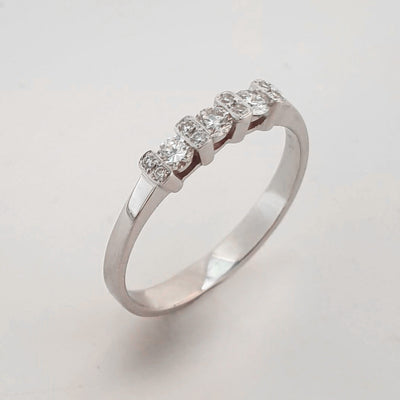
Trilogy ring Traversine in white gold with three brilliant-cut diamonds, twenty-four centigrams total
€1.230,00