Tahitian pearl
At the top, among the silver scrolls
- Cut
- Round
- Note
- Natural gray pearl, diameter 12.81 mm

Collection Creazioni in Argento·Anello·Floral motifs on the shank
Twelve millimeters eighty-one of gray Tahitian pearl, held by the silver scrolls that make up the whole shank.
Drawn and built by hand at the bench, in Tosi.
The pearl sits at the top, round and large, gray with a warm brown undertone; a band of light runs across it, and towards the bottom the color deepens. It is not closed in a setting: it is held by the silver scrolls that rise from the shank and draw in around its base like petals. And the shank is not a solid band: it is a ribbon of silver bent into scrolls that widen as they climb towards the pearl, and between one scroll and the next the void remains — looking at the ring head-on you see right through it. The silver is polished to a mirror everywhere, inside the curves too; there is no oxidized part, and no stone other than the pearl.
The pearl measures twelve millimeters eighty-one in diameter. The silver weighs nine grams eighty and is the only metal in the piece: there is no gold anywhere. The studio declares it a natural gray Tahitian pearl — the gray is therefore not a dye, it is the color the nacre took on as it grew in the black-lipped oyster. It remains the soft part of the ring: it sits around the third degree of hardness, it scratches with a fingernail and dissolves in acids, so it goes on last, after the perfume, and comes off before washing your hands. The scrolls that hold it are silver too, and silver is soft: if one opens it has to be closed again by whoever made it, because bent cold twice it work-hardens and snaps.
Weights and carats as the workshop declares them.
At the top, among the silver scrolls


The words of the trade, one by one, explained to those who do not know them.
I don't look at what others are doing: I would rather create in my own style. That is what makes our jewelry recognizable.
Fabio Gori — Anna Gioielli, Tosi
Every ring is made to the size of the person who will wear it: we settle it together before the work begins.
The goldsmith's workshop is also the place where made-to-measure jewellery is created and family pieces are restored: if you have an idea, or something you want brought back to how it was, that is where it starts.
A goldsmith's workshop in Tosi, on the slopes of the Pratomagno: Anna opened it in 1988, her sons Fabio and Francesco carry it on. Piercing, repoussé, chasing and burin engraving — the Florentine school, with the workshop in full view of the shop.
Due modi di cercare quello che somiglia a questo.

Flower earrings in sterling silver with round faceted peridot
€90,00

Silver flower-shaped stud earrings with blue topaz
€90,00

Silver flower earrings with amethysts
€90,00

Silver pendant with cabochon amethyst drop and faceted oval peridot, chain included
€120,00

Fiore d'Inverno ring in silver with amethyst and yellow enamel, 14 mm corolla
€120,00

Fiore d'Inverno ring in bronze with garnet, blackened corolla and hammered band
€120,00

Marte faith ring in silver, 5.50 mm narrow band, pierced on a single row of empty spaces
€140,00

Fiore d'Inverno Ring in silver with citrine quartz, sinuous hammered wire shank
€150,00

Prestige pendant in white and yellow gold, openwork cushion with integrated chain
€2.810,00
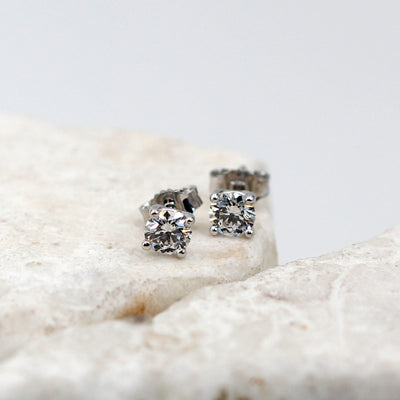
White gold solitaire earrings with lab-grown diamonds
€1.350,00

Hollow sphere pendant in sterling silver with crater perforations, on a leather cord
€390,00

Single strand Tahitian gray pearl necklace with a two-leaf silver clasp
€850,00