
Mars
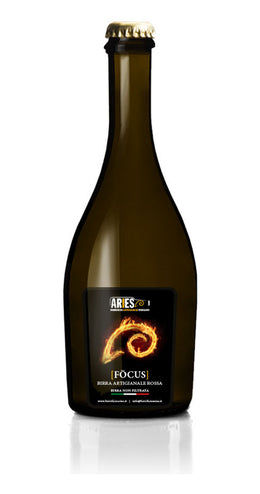
Red IPA · 33 cl bottle
Deep red-brown, seven degrees, caramel
Coming soon
Coming soon
We will let you know as soon as it can be ordered
This piece cannot go in the cart yet. Leave an address: Tuscany Market Hub will write to you, one message only, with the link to the page.
Let me know when it arrives
What it is, and what is in it
Full-bodied, with a balance between the sweetness of the malt and the bitterness of the hops. It has a deep reddish-brown color, a full aroma, and on the palate, you'll find malty caramel notes beneath a fine-grained, compact head.
It is unfiltered and unpasteurized: it re-ferments in the bottle. Seven degrees and forty units of bitterness.
- Fermentation
- Top fermentation, natural bottle conditioning
- Filtration
- Unfiltered, unpasteurized
- Ingredients
- Water, barley malt, wheat, sugar, hops, yeast.
- Allergens
- Gluten (barley malt and wheat).
What it is like
Colour
Deep red-brown
What the brewery drinks it with
The pairings declared for this beer.
- Bruschetta with liver pâté
- Smoked fish or meat carpaccio
- Grilled or slow-cooked red meat
- Tuscan soppressata
The label’s terms, explained
What an IPA is
India Pale Ale. The name comes from the pale ales the English shipped to India in the nineteenth century: more heavily hopped and stronger than the others, because hops and alcohol preserve. Today it no longer preserves anything, and IPA has become the name of a family of beers in which the hops — in bitterness and in aroma — come before everything else.
What the “Red” adds
The red color of a Red IPA comes from the malts, not from a coloring: caramel and lightly roasted malts that bring, besides the tint, a caramel sweetness. It is that sweetness that sets it apart from a pale IPA: the hops find something to push against instead of standing alone, and the beer comes out fuller and less dry at the close.
Wheat in a barley beer
Alongside the barley malt, the label declares wheat. Wheat carries more protein than barley, and protein holds up the head: a beer with wheat makes a denser, longer-lasting head, and gives a fuller feel in the mouth. It is a cereal with gluten, and for that reason it appears among the allergens together with barley.
What IBUs are
International Bitterness Units: the laboratory measure of the bittering compounds the hops have given to the beer. An industrial pale lager sits around 10-20, a pale ale between 30 and 45, a modern IPA often goes past 60. It is not a scale of taste: on a dense, caramelly wort the same number is felt less, because the malt absorbs part of it.
Degrees Plato
It measures the sugars dissolved in the wort before the yeast starts to work: one degree Plato is equal to one gram of extract per hundred grams of wort. Seventeen is a dense wort — an ordinary blond starts at eleven or twelve — and it is from there that the seven degrees and the full body come together.
What it says on the bottle
The mandatory label information, transcribed from the label of the size on sale.
- Ingredients
- Water, barley malt, wheat, sugar, hops, yeast.
- Allergens
- Gluten (barley malt and wheat).
- Alcoholic strength
- 7% vol.
- Contents
- 33 cl bottle
- Place of production
- Produced in San Pierino, Fucecchio (FI)
| Energy | 242 kJ / 58 kcal |
|---|---|
| Fat | 0 g |
| of which saturates | 0 g |
| Carbohydrate | 4,4 g |
| of which sugars | 0,7 g |
| Protein | 0,6 g |
| Salt | <0,01 g |
| Alcohol (ethanol) | 5,5 g |
Where and how it is made
Daniele Nespeca, for Birrificio Aries, in Fucecchio.
A two-hectoliter brew · from barley to bottle, all in house
All 76 products by Birrificio Aries- How it is made
- Selection of raw materials, barley milling, mashing, filtration, whirlpool, yeast pitching, primary fermentation in fermenter, secondary fermentation in bottle or keg. All stages on-site: 2 hl brew kettle and two 600 l temperature-controlled stainless steel conical fermenters.
- Other sizes
- 33 cl bottle; 24 l keg.
The brewery’s other beers
The elements




The specials
